
The first two entries here were a name, a domain, and an argument for why a fault tree needs a purpose-built tool rather than a flowchart. All of that is true, but none of it is proof. This entry has a screenshot instead.
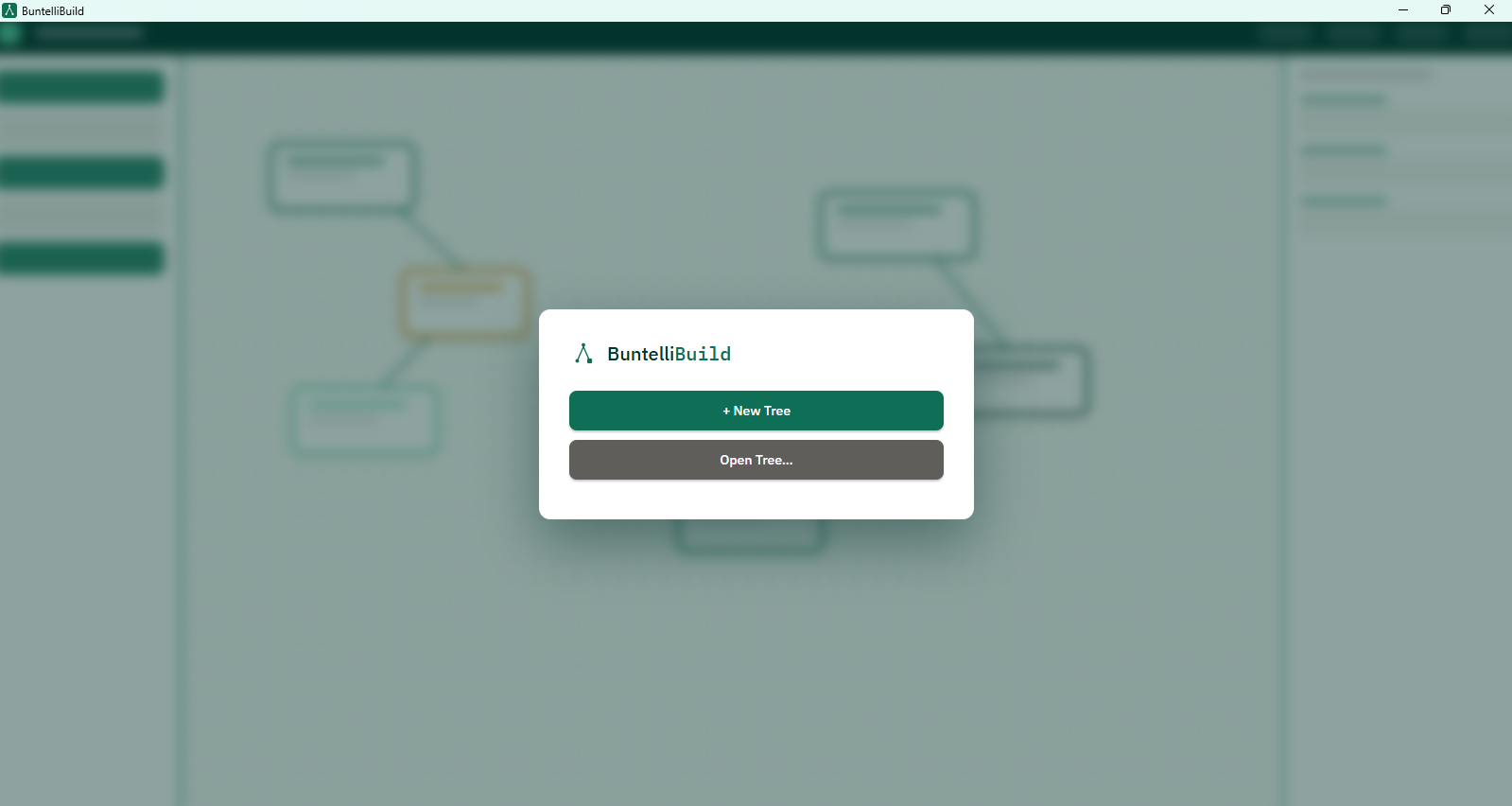
That is the whole of what you see first, new tree, open an existing one, or go straight back into whichever one you had open last. It is deliberately plain, because everything interesting happens one click further in. A multi-panel builder with a block palette on the left, the canvas in the middle, and a block editor on the right, running as an actual desktop app rather than a demo in a browser tab.
What's actually working
Behind that screen there are a growing set of engineering focussed blocks. Drag them, place them, connect between them, undo/redo, autosave, and a validation pass that checks the tree for orphan blocks and unlabelled branches before it will let you commit a version or print it. Save and load write and read a plain file on disk. No account, no cloud database, nothing leaves the machine it runs on.
None of that is finished. There is no media/image attach yet, no licensing, and no automated tests. Create a tree, edit it, validate it, save a version, print it, all runs end to end, today, on my machine, in the evenings between the day job and everything else.
Why show this now
Mostly because "I am building something" and "here is the thing I built" are different claims, and only one of them means anything. The plan from the start has been to prove the tool works before trying to sell it to anyone. This is what that looks like partway through.
Previously: why a fault tree and not a flowchart.